

crazy time | Exploring the Unique Intersection of Customer Support and Gaming with 'Crazy Time'
In the rapidly evolving world of online gaming, categories that merge seemingly disparate elements are emerging as new frontiers. One such intriguing intersection is that of 'Customer Support' and gaming. This article delves into how 'Crazy Time,' a popular keyword within this category, encapsulates the juxtaposition of service and entertainment in modern gaming.
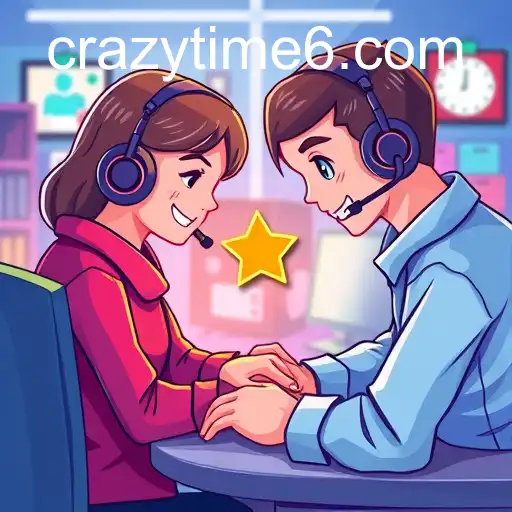
The gaming industry has always been at the forefront of innovation, not just in terms of graphics and gameplay mechanics but also in how they interact with their customers. Customer support within gaming is no longer just about troubleshooting. It has evolved into an immersive experience, often blurring the lines between gameplay and real-time interaction. Games like 'Crazy Time' illustrate this perfectly.
'Crazy Time' represents a unique niche within the gaming world—it's a category that appeals to players seeking excitement and interactive thrills, while also demanding robust support systems that can enhance the user experience seamlessly. This game is a blend of chance and interactive entertainment, and it thrives on providing players with real-time support, as much as it does on its engaging gameplay.
For gaming companies, this convergence presents both a challenge and an opportunity. Providing support in this context is not merely about resolving issues but about enriching the player's overall experience. Efficient customer support can turn a frustrating glitch into a positive interaction, fostering loyalty and enhancing the brand's reputation. With games like 'Crazy Time,' the support team needs to be as dynamic and engaging as the game itself, capable of dealing with challenges on the fly.
What makes 'Crazy Time' particularly notable in this category is its ability to engage players with its live game format while incorporating elements of chance and interactive play. This necessitates a level of customer support that is quick, interactive, and deeply ingrained in the gaming experience. The keyword fits aptly because, for many players, the game 'Crazy Time' offers not only the thrill of play but also the reassurance that effective support is just a click away.
In conclusion, the rise of 'Customer Support' as a game category, with 'Crazy Time' as a seminal example, underscores a burgeoning trend in the gaming sector. As virtual worlds continue to expand, the role of customer support will become increasingly integral, transforming traditional support roles into pivotal elements of player engagement. This synergy between engaging play and supportive interaction signals a 'crazy time' indeed for both players and support teams, crafting a future where customer support is not just reactive but an integral component of gaming enjoyment.
